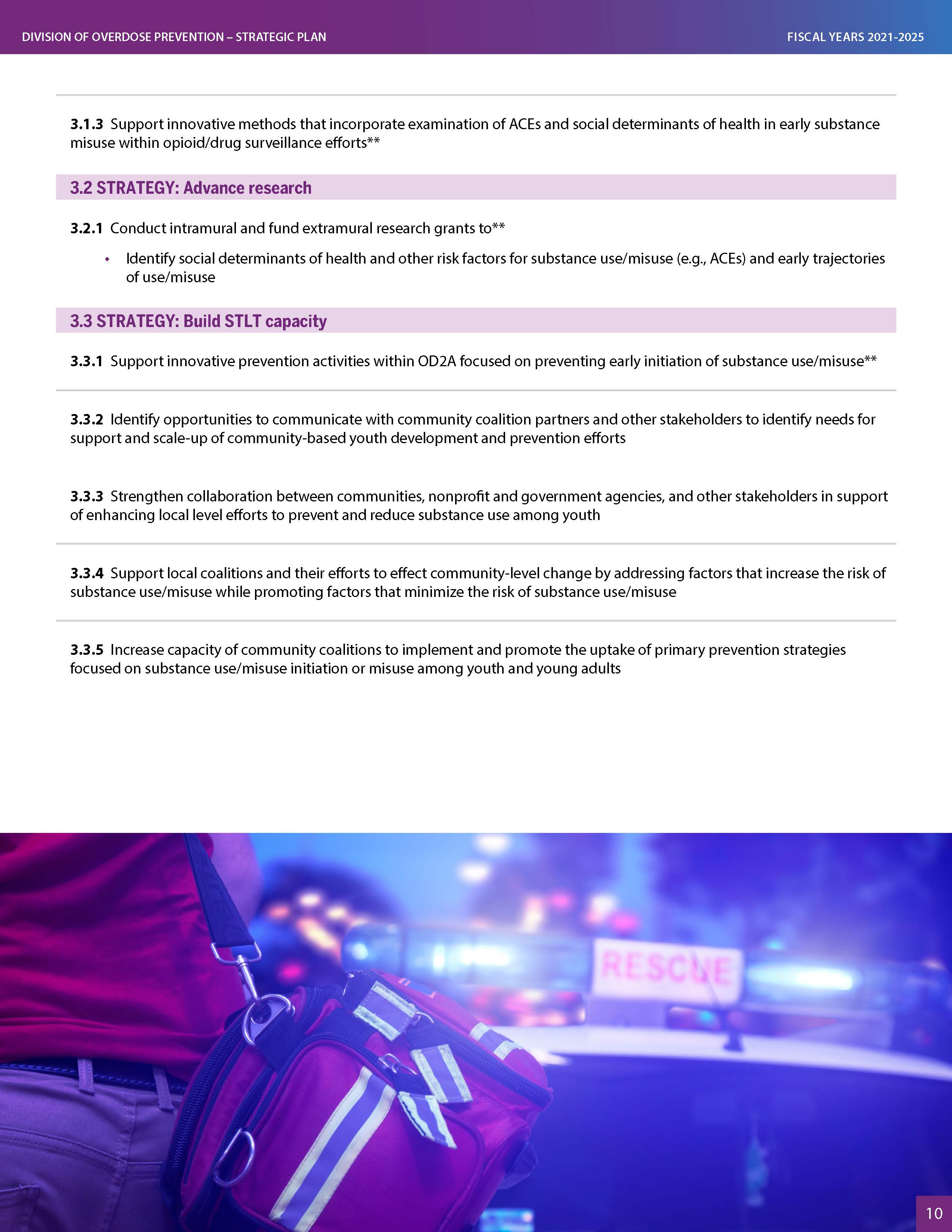
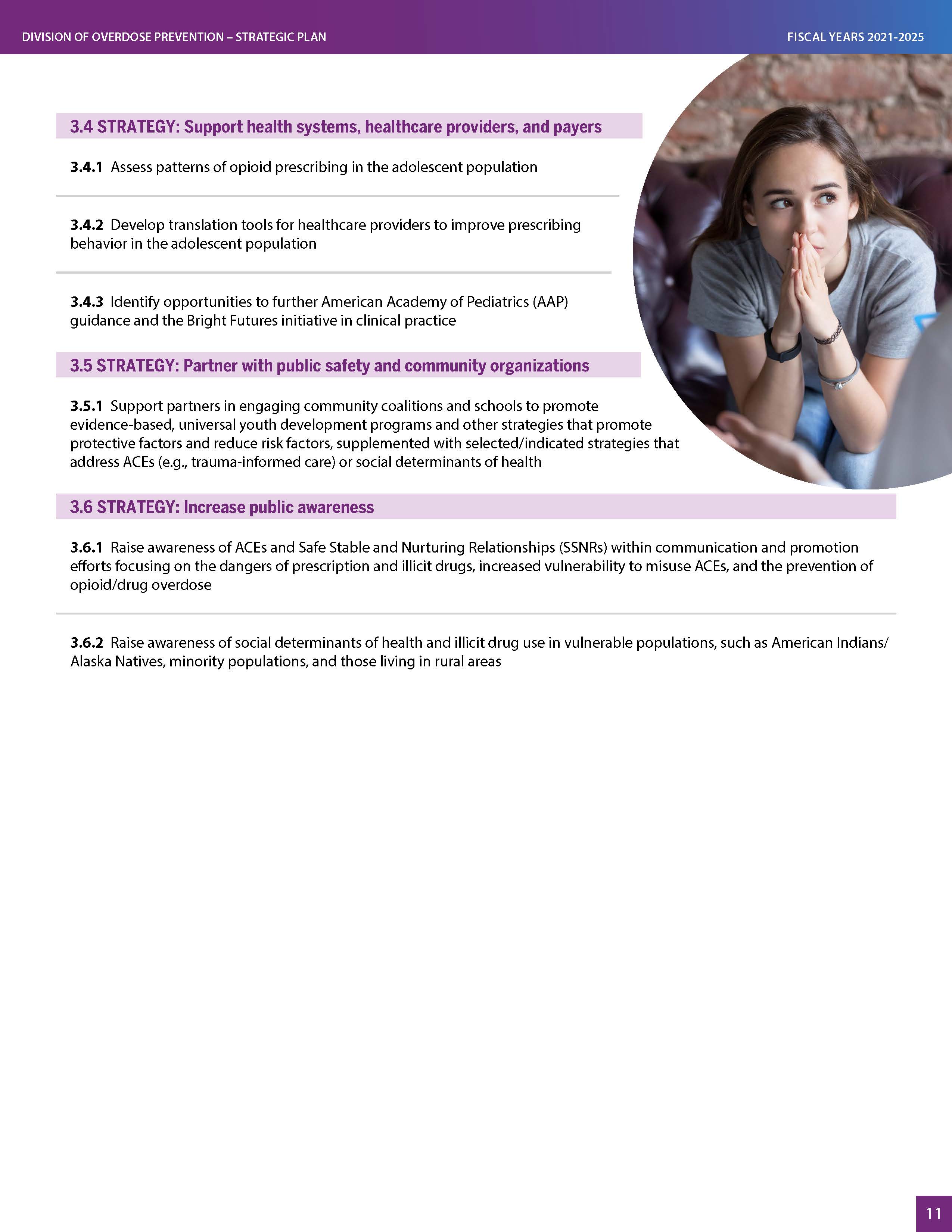
Modular Page System
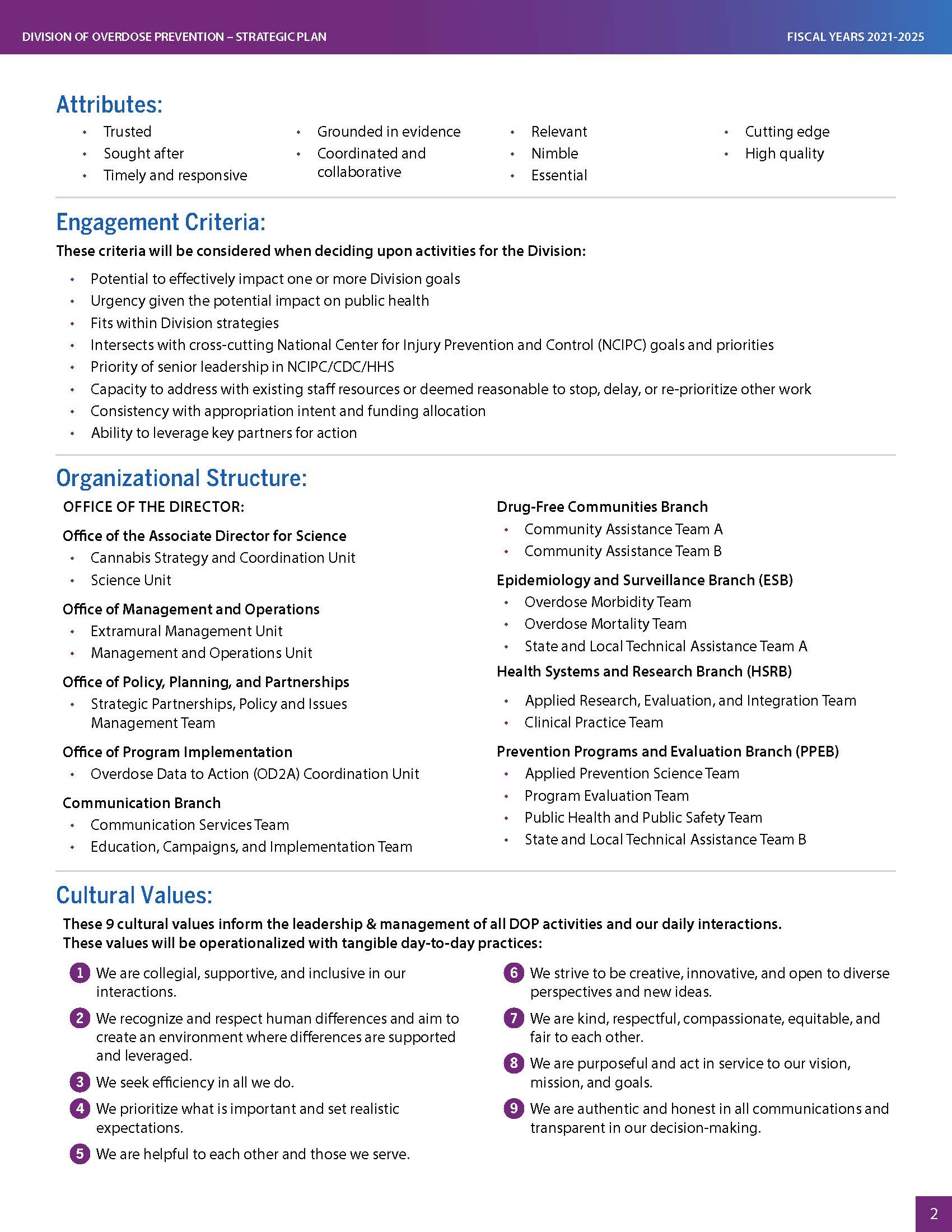
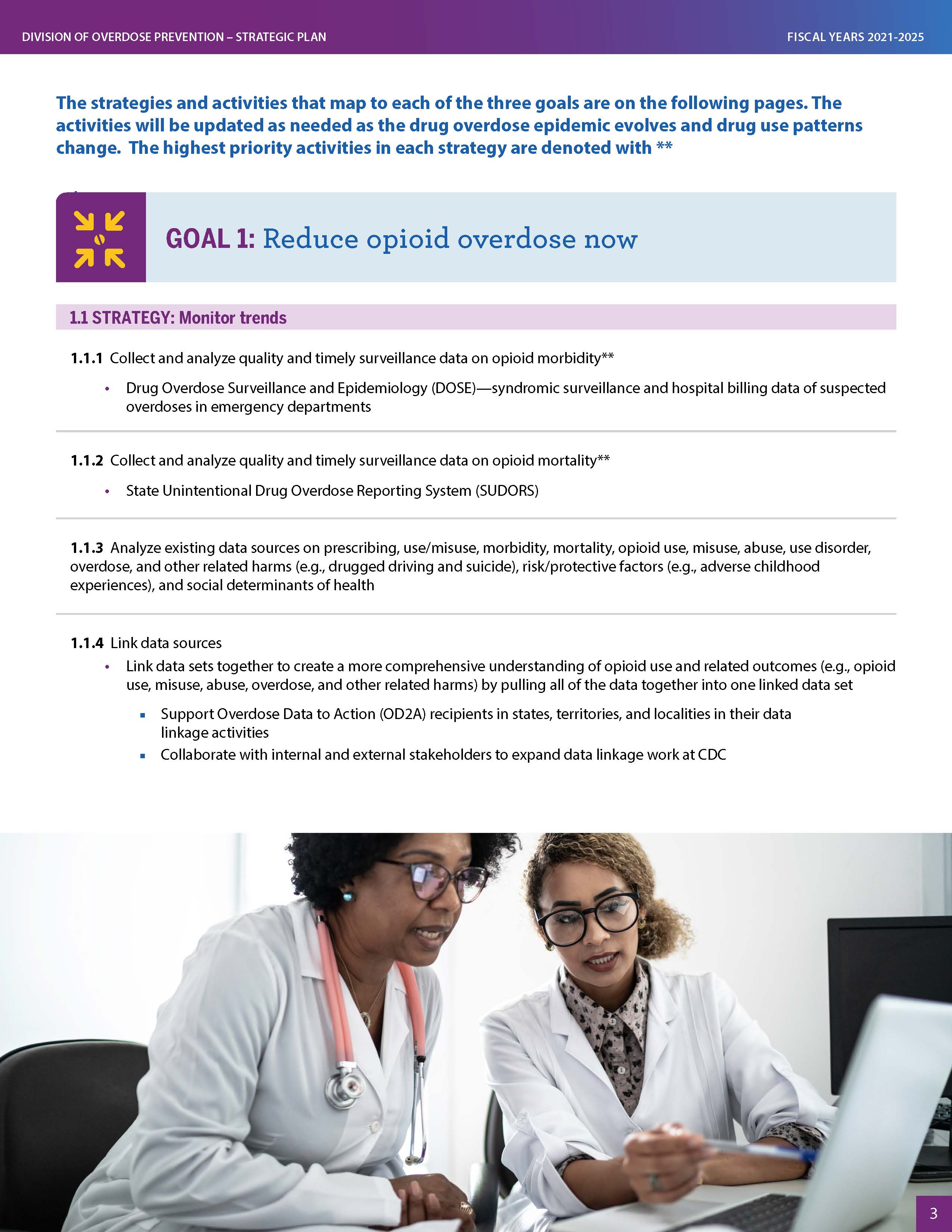
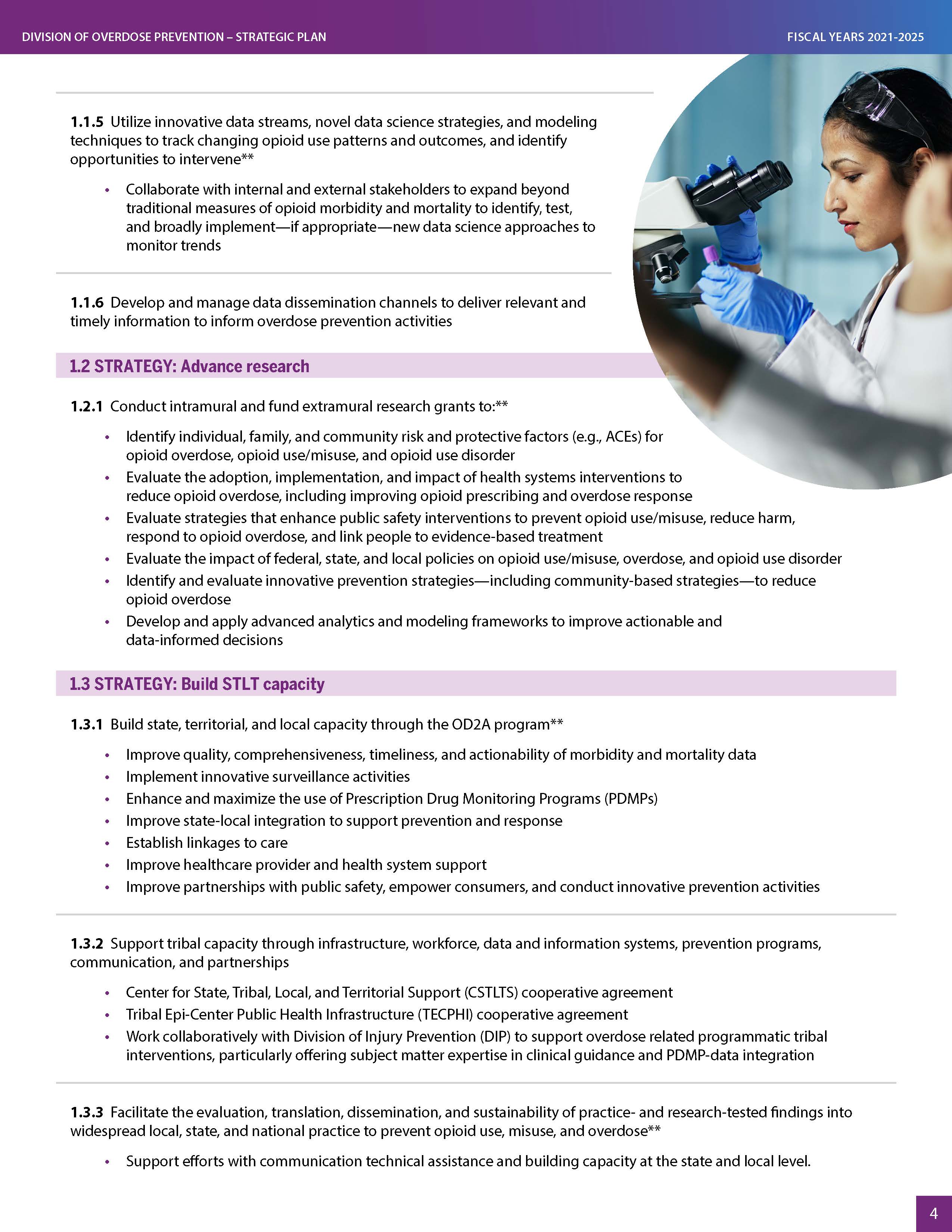
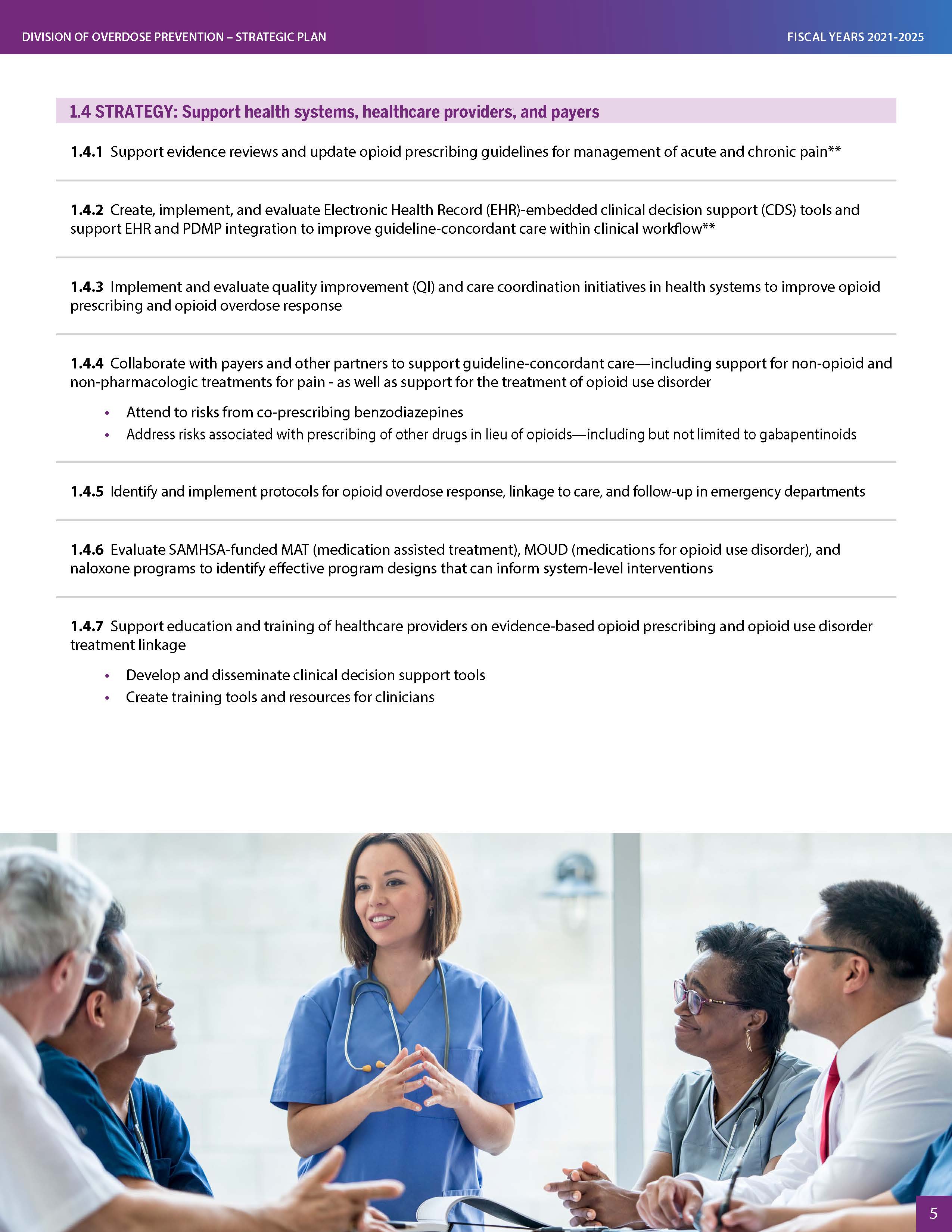
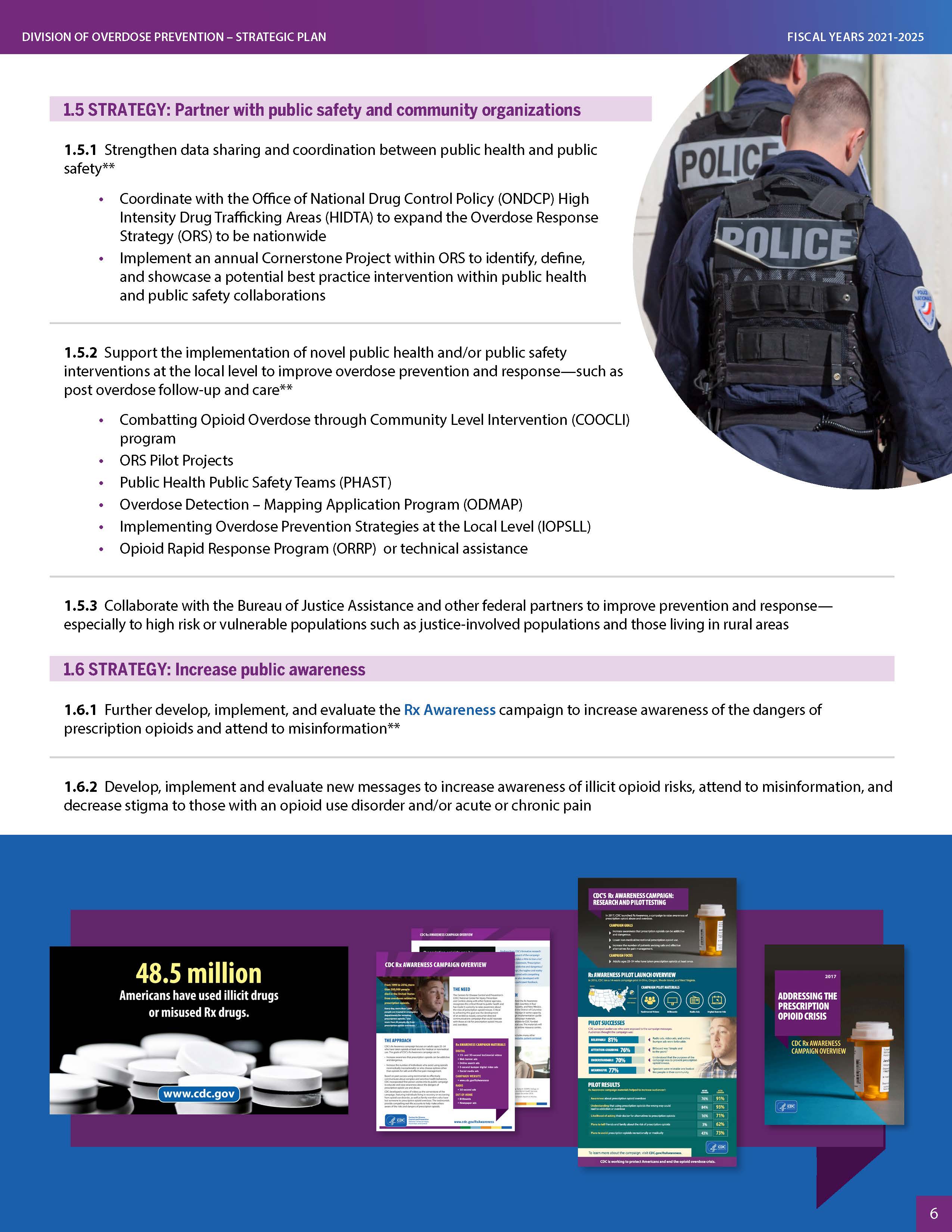
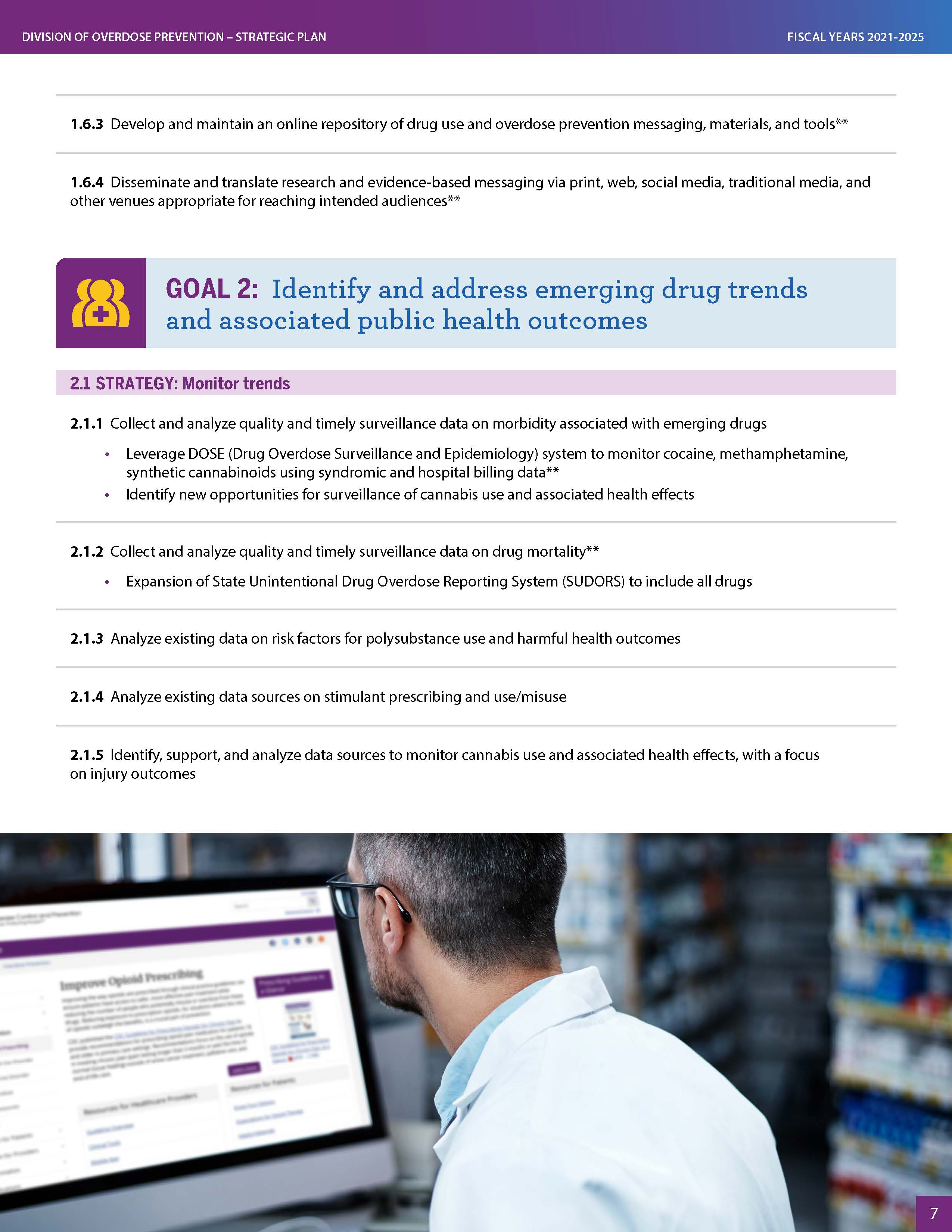
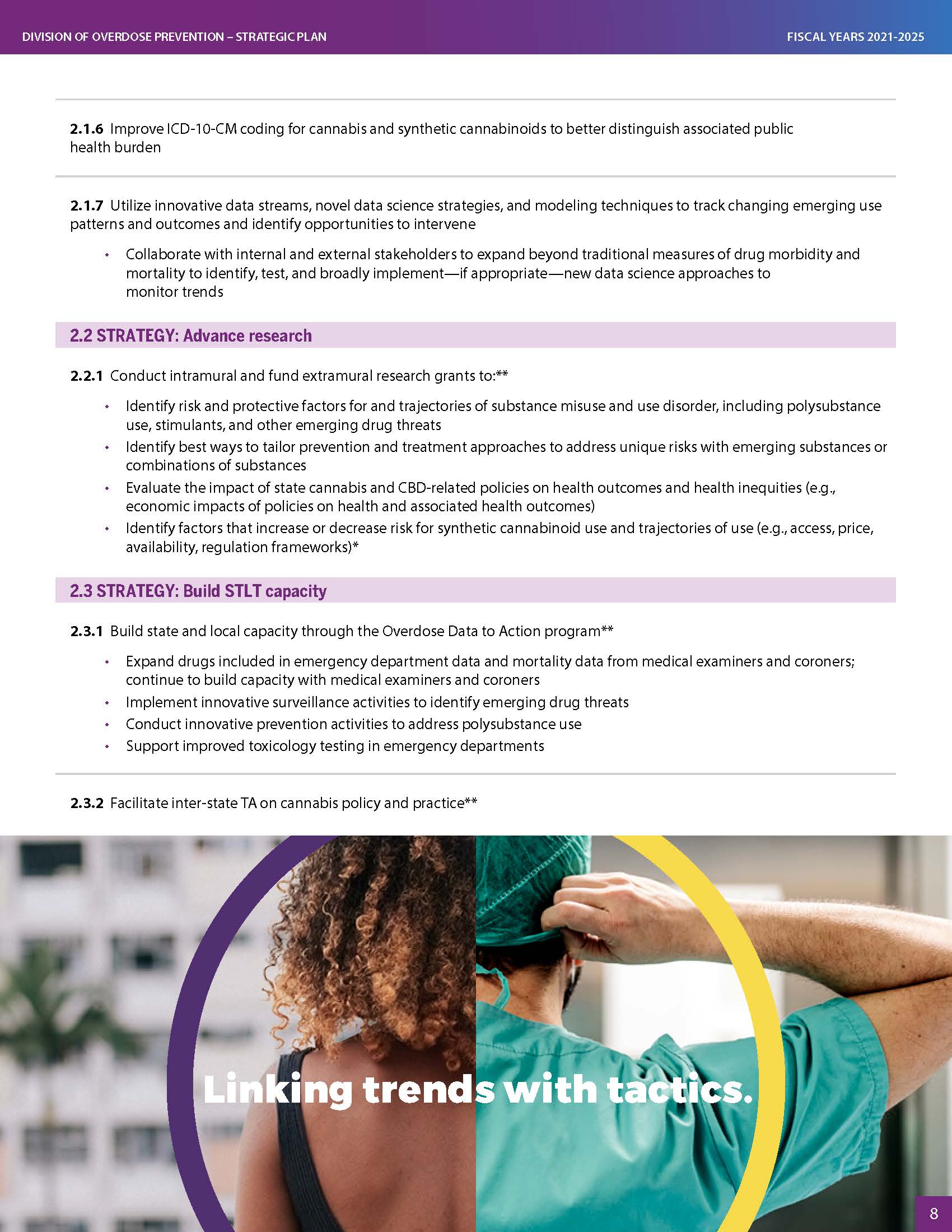
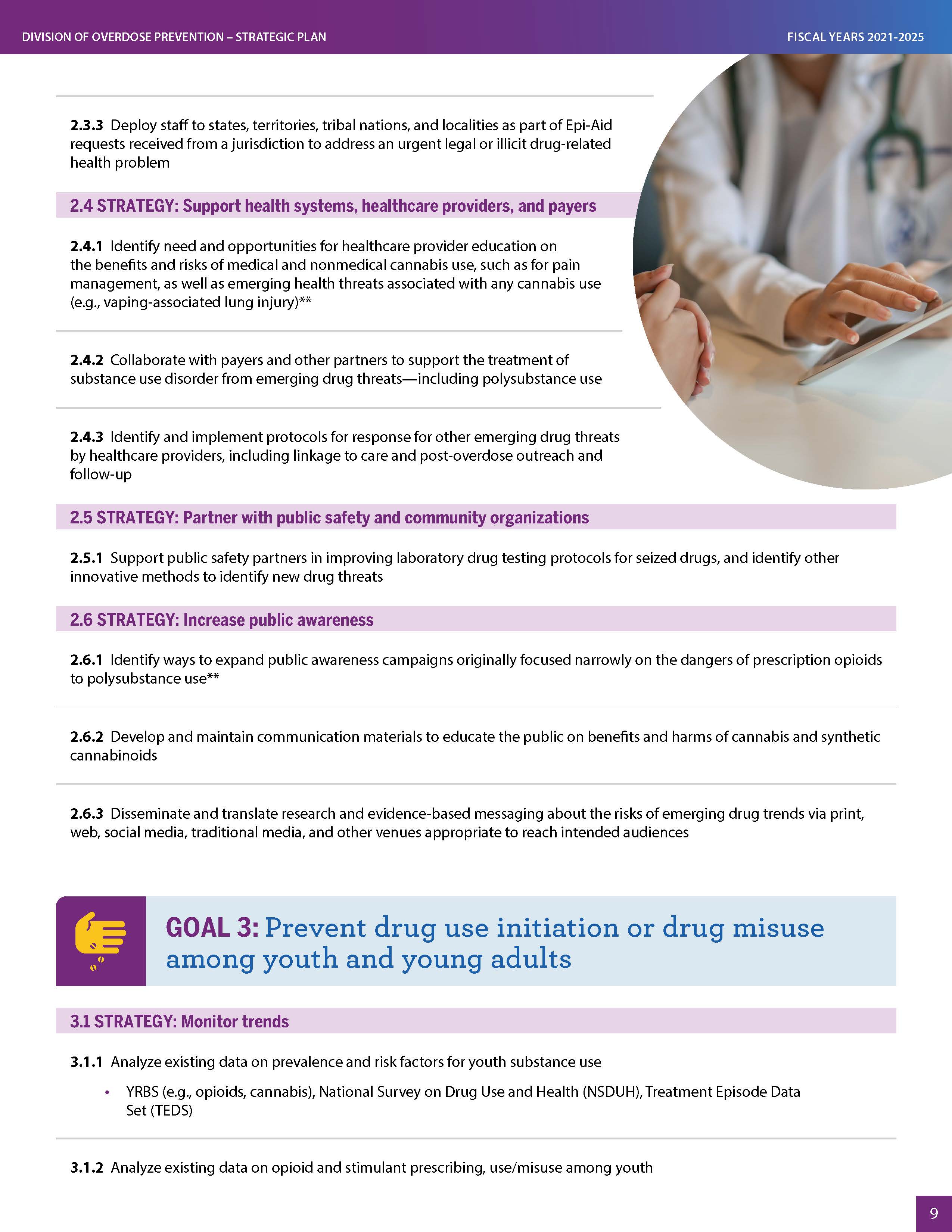
Repeatable page structures helped organize goals, strategies, values, and supporting details across a long-form publication.

For the CDC’s Division of Overdose Prevention, I supported the design and production of a multi-page strategic plan that translated complex public-health priorities into a clear, structured, and visually consistent publication. The goal was to create a document that could communicate leadership vision, program priorities, engagement criteria, and detailed strategy content in a way that felt credible, organized, and easy to navigate.
My design approach focused on publication hierarchy, modular page architecture, and reader-centered information design. Because the content included mission statements, organizational context, cultural values, goals, strategies, and detailed activity tables, the layout needed to guide readers through dense information without making the document feel overwhelming.
The final design uses consistent section framing, structured content blocks, clear typographic levels, icon-driven visual cues, and repeatable goal-and-strategy layouts to support scanning and comprehension. The result is a polished strategic publication that balances CDC’s public-health authority with a more accessible reading experience for leadership, partners, program teams, and external stakeholders.
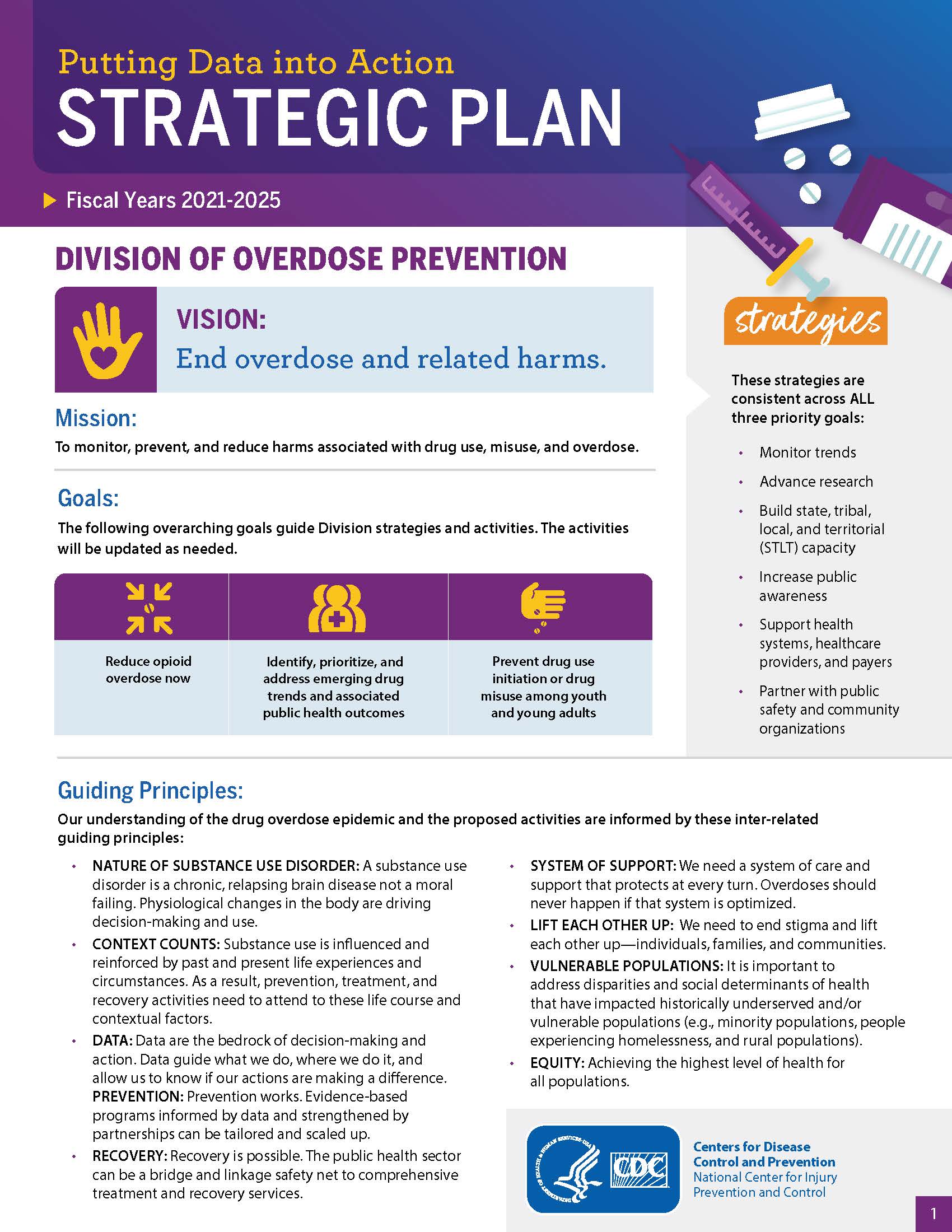
Repeatable page structures helped organize goals, strategies, values, and supporting details across a long-form publication.
Clear headings, section breaks, callouts, and structured tables helped readers scan complex information without losing context.
A restrained visual system, accessible typography, and consistent CDC-aligned styling helped the document feel credible and professional.
The strategic plan needed to serve multiple reader groups, including CDC leadership, program teams, public-health partners, state and local stakeholders, and audiences who may need to reference specific goals or activities quickly. Because each audience would use the document differently, the design needed to support both high-level scanning and deeper reading.
The communication goal was to make the plan feel organized, credible, and easy to navigate. The document needed to present vision, mission, goals, strategies, engagement criteria, and implementation details without overwhelming the reader or diluting the importance of the content.
The creative direction centered on calm authority. The visual system needed to feel polished and official while still making the content approachable. I used a structured layout approach with consistent page headers, section identifiers, content modules, and visual cues to help readers move through the document with confidence.
The publication strategy relied on predictability. Key content types such as vision statements, mission language, goals, strategies, engagement criteria, and supporting bullets were given distinct treatments so readers could recognize patterns as they moved through the plan. This design-first structure helped transform dense content into an organized reading experience.
I treated the strategic plan as a publication system rather than a series of individual pages. The layout needed to scale across narrative sections, tables, lists, callouts, and goal-based content while keeping the reader oriented at every step.
Because the strategic plan was intended for broad public-health and stakeholder use, readability and accessibility were treated as essential design requirements. The content needed to remain legible across print and PDF formats, while also supporting readers who may only scan specific sections.
The final strategic plan provided a more polished and usable way to communicate the Division of Overdose Prevention’s priorities. The publication system helped transform complex planning content into a cohesive document that could be reviewed, shared, and referenced by multiple stakeholder groups.
From a design standpoint, the value is in the balance between clarity and rigor. The document maintains the credibility expected of a CDC publication while using stronger hierarchy, layout consistency, and modular design patterns to make the information easier to understand and navigate.