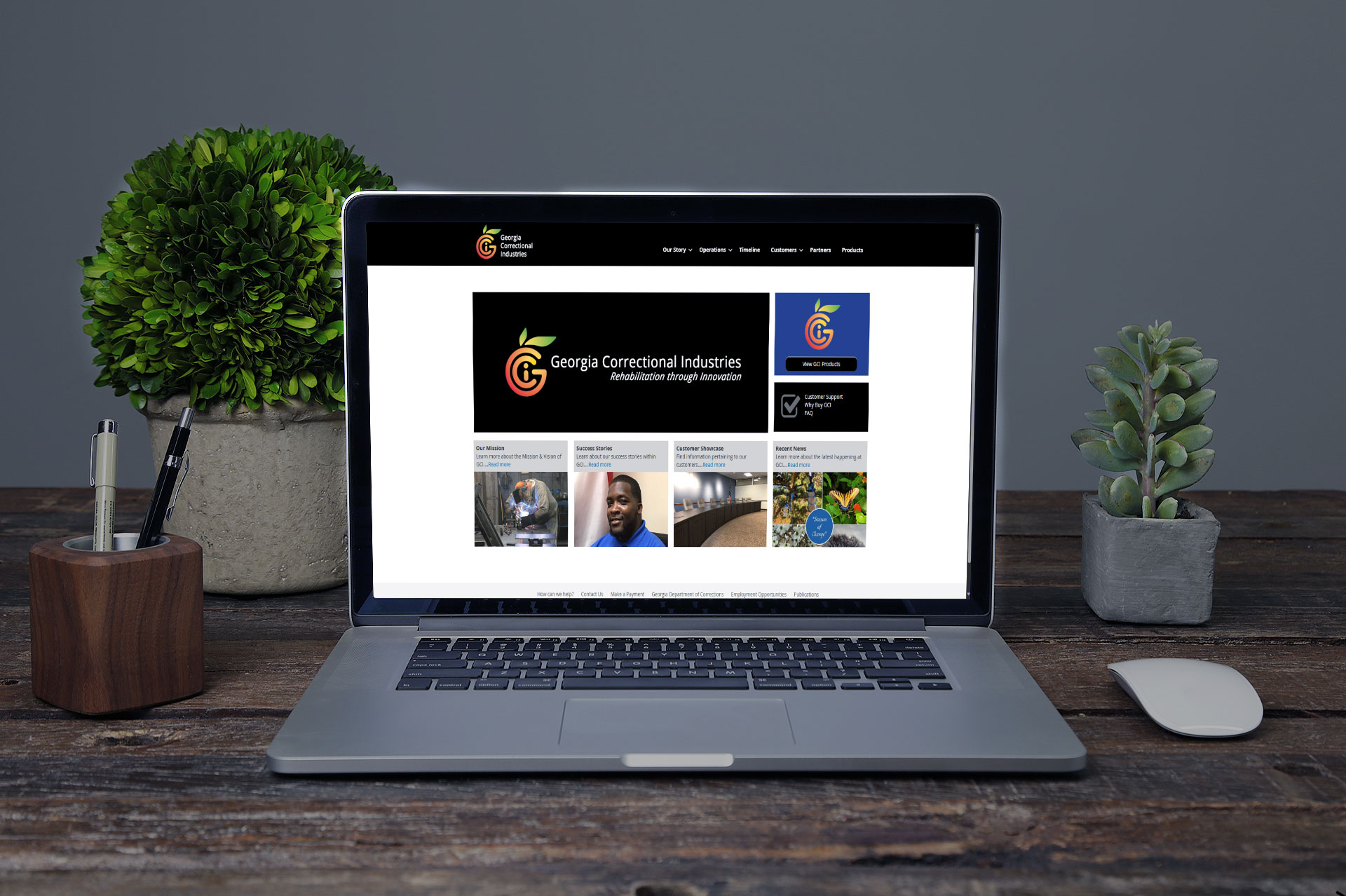
New landing architecture, streamlined merchandising, and ADA-compliant components reduce friction from discovery to checkout.

Georgia Correctional Industries(GCI)— Modernizing a DTC-Style Commerce Experience

Replatformed a legacy catalog into a conversion-first storefront—improving product discovery, checkout confidence, and accessibility for institutional and public buyers.

View Live Site

My Role

  • Lead Designer
  • UI/UX Designer
  • Front‑End Developer
  • Project Manager
  • Product Designer

Challenge

Led GCI’s end-to-end digital product transformation by redefining the brand, migrating the platform from Joomla to Magento 2, and designing an accessible, conversion-optimized eCommerce experience. The redesigned product improved content clarity, reduced friction across key user journeys, and increased product discoverability—resulting in higher engagement, improved accessibility compliance, and measurable gains in sales performance.

Key Metrics

  • 508 Compliance: 100%
  • Navigation Depth: from 4‑click to 2‑click
  • SEO Visibility: +45%
  • KPI Chips (short): ↓ Steps to product (–38%), ↑ PDP engagement (+24%), WCAG 2.2 AA patterns

Responsibilities and Product Outcomes

Product Rebrand and Visual System Strategy:
As Product Designer, I led the visual and experiential rebrand of the platform to support trust, clarity, and long-term scalability. This work focused on evolving the brand into a modern, product-led identity while maintaining consistency across the user experience.

  • Defined a refreshed visual identity system, including typography, color palette, iconography, and visual hierarchy, to improve brand credibility and product clarity.
  • Designed modular, branded UI components that reinforced consistency across the platform and supported scalable product development.
  • Reimagined page layouts, supporting graphics, and marketing visuals to deliver a more accessible, cohesive, and product-focused design direction.

Product Design Ownership and Execution:

  • Led the end-to-end product design process, from information architecture and wireframes through interactive prototyping and final UI implementation.
  • Audited and restructured legacy content and assets, reorganizing product information to create a more intuitive, user-centered catalog and navigation experience.
  • Facilitated design reviews and UX walkthroughs with executive stakeholders, translating strategic feedback into actionable product and experience improvements.
  • Conducted analytics and behavioral analysis to identify high-performing pages, underutilized content, and key user flows—directly informing product hierarchy and layout decisions.

Problems Solved and Product Decisions Made:

  • Established foundational SEO structures by integrating keyword research, semantic markup, and optimized metadata to improve product discoverability and inbound traffic.
  • Ensured full Section 508 compliance across the platform by applying accessible design principles and validating usability for assistive technology users.
  • Designed a one- to two-click navigation framework to reduce cognitive load and friction across core user journeys.
  • Evaluated and recommended secure, scalable payment processing solutions to support institutional and B2B purchasing requirements.
  • Redesigned and reprioritized the product catalog to align with observed user behavior, surfacing high-demand and top-performing inventory.

Team meeting sketching a new brand identity
Brand workshop & wireframe sketches
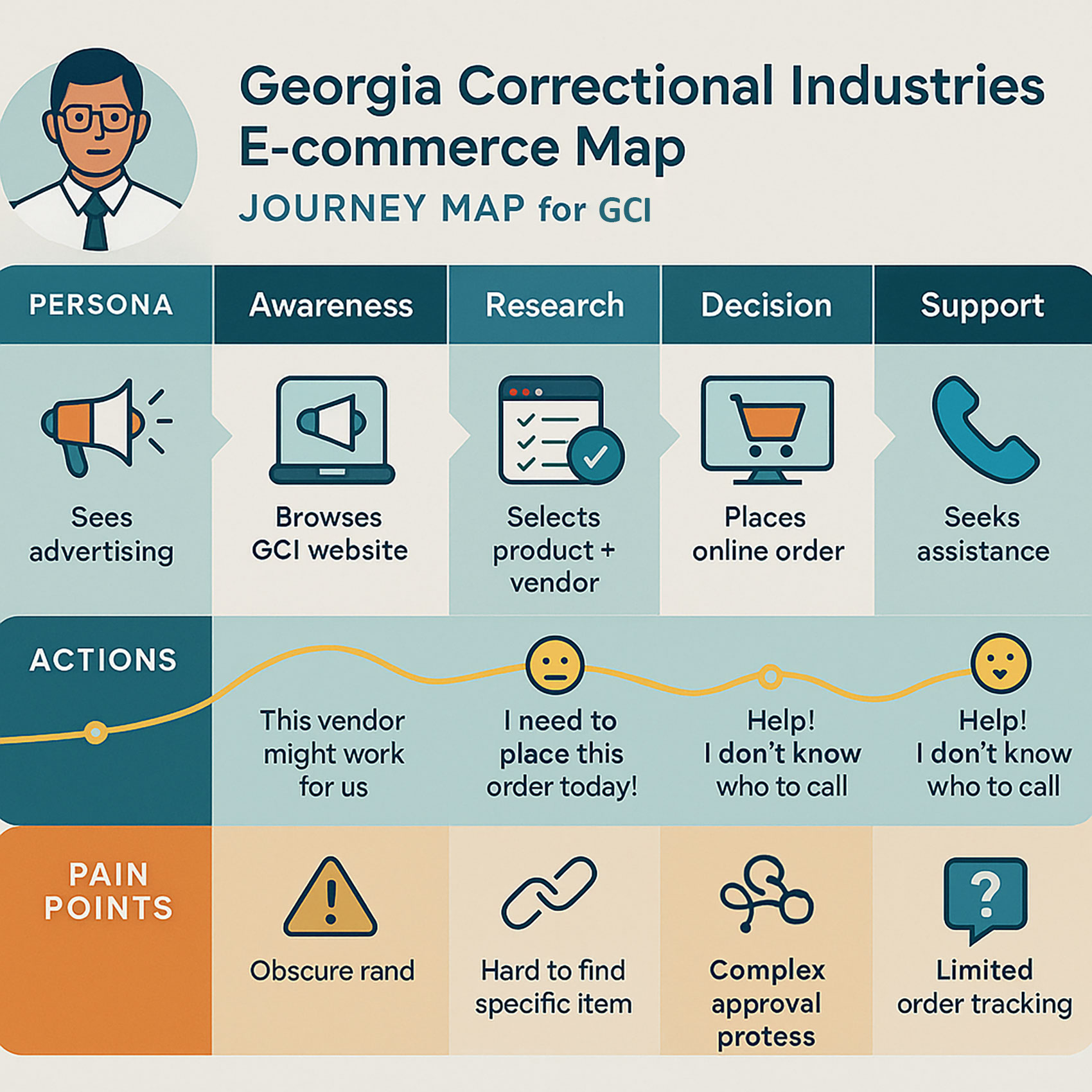
GCI Journey Map
GCI Journey Map

Research, Planning, and Product Discovery

The Research, Planning, and Design phase established the strategic foundation for the full rebrand and redevelopment of the Georgia Correctional Industries website. As the sole Product Designer and Developer on the project, I led a structured discovery process to align executive objectives, technical constraints, and user needs into a cohesive product strategy.

I partnered closely with leadership throughout this phase, facilitating weekly working sessions with directors, executives, and the CIO to evaluate pain points within the legacy platform and define clear success criteria for the redesign. These sessions enabled shared understanding, informed prioritization, and ensured that product decisions supported both business goals and user outcomes—particularly around product visibility, discoverability, and conversion.

Key Product Contributions:

  • Stakeholder Alignment and Product Strategy: Led recurring strategy and planning sessions to gather business requirements, align on success metrics, and define measurable outcomes tied to user engagement and product sales performance.
  • UX Research and Behavioral Analysis: Analyzed user behavior data from the legacy site to identify navigation inefficiencies, drop-off points, and underperforming product pages—directly informing product structure and experience priorities.
  • SEO and Discoverability Strategy: Conducted in-depth keyword research and implemented metadata and content optimization strategies to improve organic search visibility and support long-term demand generation.
  • eCommerce Experience Optimization: Researched B2B and institutional eCommerce best practices and designed a product presentation model that emphasized clarity, accessibility, and conversion efficiency.
  • Information Architecture and Navigation Design: Redefined the site’s information architecture to support a simplified one- to two-click navigation model, reducing friction across key user journeys and improving product findability.
  • Visual System and Design Planning: Developed an updated design system that balanced brand requirements with usability, accessibility, and consistency across devices and platforms—supporting scalable product growth.

Outcome:
This phase produced a clearly defined UX and product framework, a streamlined content and product hierarchy, and a comprehensive roadmap for both rebranding and technical execution. By grounding decisions in research, stakeholder alignment, and measurable objectives, the foundation ensured that subsequent design and development efforts directly supported the project’s core goals: strengthening brand trust, improving product discoverability, and increasing sales performance.

Navigation Through the Eyes of the User

During the user research and usability testing phases of the Georgia Correctional Industries website redesign, I identified critical navigation and accessibility gaps that were negatively impacting engagement and task completion. Analytics and behavioral analysis showed that users struggled to locate high-value content efficiently and frequently overlooked essential resources—such as product documentation and downloadable PDFs—due to poor information hierarchy and insufficient visual prioritization.

Further evaluation revealed that the legacy navigation system lacked clarity, predictability, and accessibility. The primary menu was difficult to scan, did not support assistive technologies, and introduced unnecessary friction across core user journeys—particularly for users with disabilities. From a product standpoint, these issues reduced content effectiveness, undermined trust, and limited the platform’s ability to support product discovery and conversion.

Product-Led Solutions Implemented:

  • Information Architecture Redesign:Redefined the site’s information architecture by developing a comprehensive site flow and content hierarchy that aligned with user goals and reduced cognitive load across key journeys.
  • Accessible Navigation System:Designed and implemented a simplified, ADA and Section 508–compliant navigation framework supporting keyboard interaction, screen readers, and logical tab ordering to ensure inclusive access.
  • Content Visibility and Prioritization:Repositioned and visually emphasized critical links and product documentation to improve discoverability and reinforce contextual relevance.
  • Improved Content Findability:Reduced click depth and introduced context-aware linking patterns to enable faster access to relevant content with minimal user effort.
  • Consistent Navigation Behavior:Standardized internal links to open within the same browser window, preserving user context and improving back-button usability.
  • Breadcrumb Navigation Integration:Implemented breadcrumb trails across priority pages to support wayfinding, clarify hierarchy, and enable efficient navigation between related sections.

Outcome and Impact:
These improvements simplified complex navigation patterns, removed accessibility barriers, and significantly reduced friction across the user experience. The redesigned navigation system delivers a more inclusive, intuitive, and goal-oriented product experience—supporting GCI’s mission while enabling users to engage more deeply with content and products.

Graphic of site construction and user navigation
User flow & sitemap diagram
Illustration of roadblocks and solutions
Overcoming stakeholder and budget hurdles

Challenges and Change Management

The redesign and rebranding of the Georgia Correctional Industries (GCI) website involved navigating a complex set of organizational, operational, and delivery challenges. While the technical execution required precision and strategy, the more significant obstacles centered on stakeholder alignment, constrained resources, and organizational readiness for digital transformation.

As the sole Product Designer, Developer, and Project Manager, I was responsible not only for delivering the product experience, but also for managing risk, facilitating alignment, and sustaining momentum in an environment shaped by competing priorities and limited resources. Throughout the project, I focused on ensuring that product decisions remained grounded in user needs, accessibility standards, and long-term business value.

Key Challenges Addressed:

  • Stakeholder Resistance and Governance Complexity:The rebranding initiative initially faced resistance from internal teams with differing priorities and concerns about disrupting existing systems. I addressed this by framing design decisions around user impact, operational efficiency, and measurable business outcomes—helping stakeholders understand the strategic value of modernization.
  • Organizational Readiness for Change:There was cultural hesitation around evolving long-standing workflows and adopting modern digital practices. I advocated for a user-first, product-led approach by presenting research insights, prototypes, and early experience improvements that demonstrated clear benefits in accessibility, consistency, and usability.
  • Budget and Resource Constraints:Strict budget limitations influenced tooling, licensing, and third-party integrations. To stay within scope, I prioritized high-impact features, leveraged native platform capabilities, and made strategic tradeoffs that maximized value without compromising accessibility or performance.
  • Content Gaps and Fragmentation:Legacy content was outdated, incomplete, or inconsistently owned across departments. I led a structured content discovery and inventory process to consolidate, validate, and reorganize information—ensuring accuracy and alignment with the new product architecture.
  • Brand Alignment and Direction:Early in the project, branding objectives were not consistently defined across leadership. I facilitated alignment sessions to clarify brand goals, translate them into a cohesive visual and interaction system, and ensure consistent execution across the digital experience.

Outcome:
Through proactive communication, stakeholder education, and adaptive planning, the project advanced to completion despite organizational constraints. The result was a fully rebranded, accessible, and performance-optimized digital product that strengthens GCI’s brand credibility, improves user engagement, and supports the organization’s evolving digital strategy.

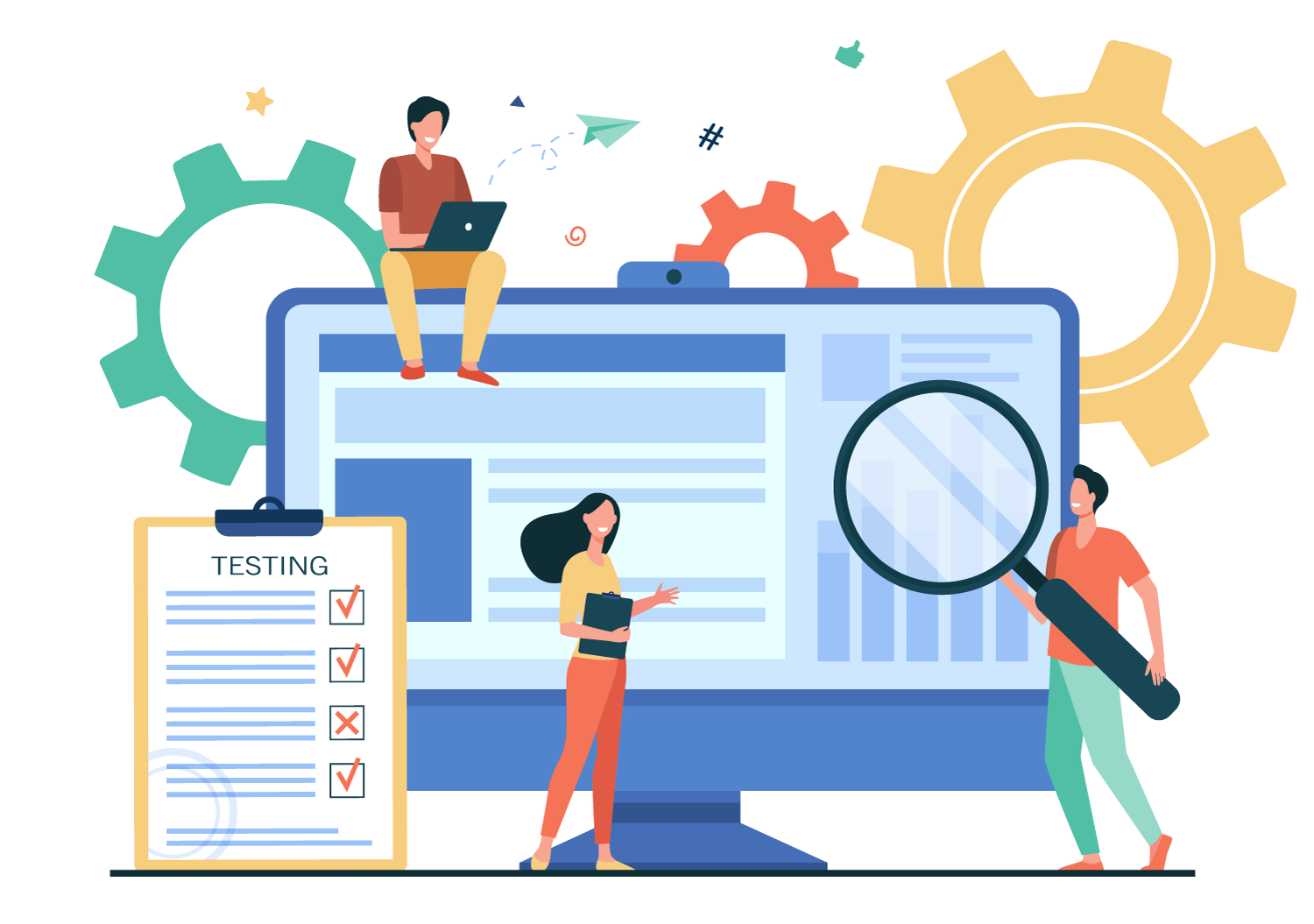
Testing and Product Validation

As the final phase of the Georgia Correctional Industries (GCI) website rebrand and redevelopment, I led a comprehensive testing and quality assurance effort to validate functionality, accessibility, performance, and eCommerce reliability across all supported environments. This phase focused on ensuring the product met user expectations, business requirements, and operational standards prior to launch.

I conducted unmoderated exploratory usability testing with multiple user groups, intentionally providing no predefined tasks or guidance. This approach allowed users to interact with the product naturally, uncovering real-world navigation issues, friction points, and breakdowns in the purchase journey that may not surface during scripted testing.

Testing was executed across all major browsers (Chrome, Firefox, Safari, Edge) and device types (desktop, tablet, mobile) to confirm responsive integrity, visual consistency, and predictable behavior. Given the business-critical nature of the storefront, particular emphasis was placed on validating eCommerce workflows—including product discovery, cart interactions, and checkout and payment processing—to ensure reliability, security, and user trust.

Testing Objectives and Product Risks Addressed:

  • Responsive Integrity:Validated that layouts, components, and interactions scaled fluidly across screen sizes and orientations without visual or functional degradation.
  • User Experience and Flow Validation:Identified navigation friction, dead ends, and usability gaps that could negatively impact browsing or purchasing behavior.
  • Cross-Browser Compatibility:Verified consistent rendering of layouts, typography, scripts, and media assets across all major browsers.
  • Search and Discoverability Optimization:Evaluated metadata structure, product categorization, and content hierarchy to support effective search indexing and product visibility.
  • Security and Transaction Stability:Assessed checkout workflows, payment handling, and form interactions to confirm secure data processing and system stability.

Outcome:
Insights from this testing phase directly informed final optimizations to layout structure, navigation behavior, asset loading, and checkout efficiency. The result was a stable, accessible, and production-ready digital product that delivers a consistent, trustworthy experience for users while supporting GCI’s operational and revenue goals.
Multidevice QA & usability tests